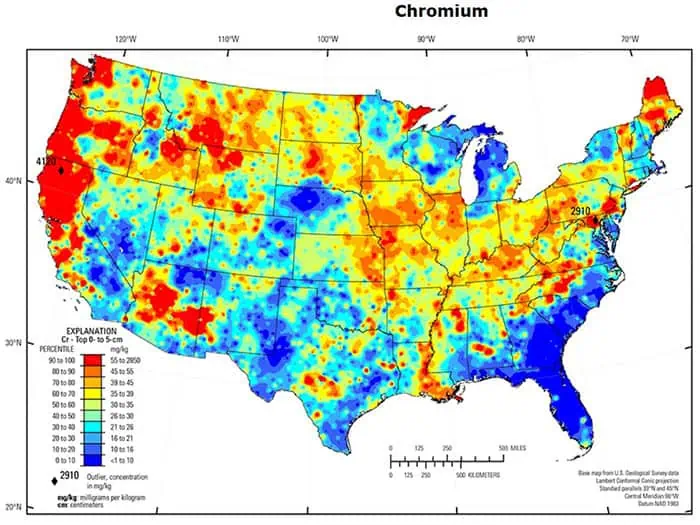
Updated Chromium Toxicity Values and Implications for Soil Cleanup in Florida
Where Does Chromium Come From?
Chromium (Cr) occurs in the Florida environment due to a combination of natural conditions and historical land-use practices. In Florida, chromium is most commonly encountered in agricultural areas because phosphate-based fertilizers are derived from locally mined phosphate rock that naturally contains trace metals, including chromium. Chromium is also associated with solid-waste landfills and filled areas, such as lakefills and reclaimed lands, where materials, including construction debris, treated wood, metals, pigments, plastics, urban fill, and dredged sediments, may contribute chromium to soil and groundwater. In addition, chromium may be present in composts and biosolid-based fertilizers derived from municipal biosolids and organic waste, which are commonly used in Florida landscaping and agricultural applications. Historical use of certain pesticides and herbicides may also represent a minor source of chromium as an impurity in older metal-based formulations.
How is Chromium Regulated in Soil?
In the environment, chromium occurs in two primary oxidation forms: Cr III, which is more stable and less toxic, and Cr VI, which is more mobile and more toxic and is known to be a human carcinogen. While Florida has soil cleanup target levels (SCTLs) for both Cr III and Cr VI, Cr VI is typically used for risk evaluation because it is more conservative. Therefore, Cr VI is used as the default risk driver unless site-specific data demonstrate that chromium is predominantly present in the Cr III form.
In 1998, the U.S. EPA’s Integrated Risk Information System (IRIS) classified Cr VI as a “known human carcinogen by the inhalation route of exposure” based on strong evidence linking inhaled Cr VI to lung cancer in humans. More recently, in August 2024, the EPA released an updated toxicological review for Cr VI, including proposed changes to key toxicity factors.
These toxicity values are widely used by federal, state, and local agencies to develop environmental cleanup standards. In Florida, for example, both the State of Florida and Miami-Dade County rely on IRIS values to set soil cleanup target levels (SCTLs), as outlined in Chapter 62-777, Florida Administrative Code (FAC), and Chapter 24-44(2), Code of Miami-Dade County. If the updated toxicity values are adopted, cleanup standards for chromium will decrease significantly.
What Has Changed?
Two key changes to the toxicity factors include the following:
The updated IRIS assessment proposes an oral CSFo of 0.27 (mg/kg·day)⁻¹, (lifetime exposure, with Age-Dependent Adjustment Factors (ADAF) applied) and an IUR of 0.018 µg/m³ (also ADAF-adjusted). These toxicity factors would be used for land uses that involve childhood exposure (e.g., residential areas, parks). Additionally, the update proposes adult-based values, specifically an oral CSF₀ of 0.16 (mg/kg·day)⁻¹, and an IUR of 0.011 µg/m³. These adult-based values can be used for exposure scenarios that do not include early life (<16 years of age, e.g., commercial/industrial).
Using the updated IURs and oral CSFo, we recalculated the Florida SCTLs; the resulting SCTLs are substantially lower than the current SCTLs:
For comparison, the above estimates assume that all input parameters remain unchanged. However, several exposure parameters, such as body weight, exposure duration, ingestion rate, and the calculated dermal cancer slope factor (based on the adopted oral cancer slope factor), have already been updated by the state. When those updated parameters are applied, the residential SCTL is 4.0 mg/kg, which remains significantly below the current standard.
What Does this Change Mean?
Because of the lower cleanup standards, background studies will be important for both residential and commercial/ industrial sites. Stricter cleanup levels may require engineering or institutional controls, such as deed restrictions or limits on property use, to manage concentrations that cannot be attributed to background conditions.
Although the updates to Chapter 62-777, FAC, and Chapter 24-44 of the Code of Miami-Dade County have not yet reflected the latest CSFO and IUF, it remains crucial to monitor both state and county regulatory changes. Staying up to date allows us and our clients to plan.
Knowing this in advance can make a real difference. For example, if a client has a pending transaction or redevelopment plan, understanding potential changes in cleanup standards can help them expedite efforts to address environmental concerns under current rules, rather than face delays or stricter requirements later.
Beyond transactional planning, this knowledge is also essential for environmental risk assessments. Changes in SCTLs can influence decisions about remediation strategies and resource allocation. In other words, staying informed isn’t just about compliance; it’s about making smarter, proactive decisions that save time, money, and effort in the long run.
The following links will direct you to the proposed toxicological review and additional resources:
 Anabel Rodriguez-Garcia is an environmental scientist with a decade of experience in the sustainable management of soil, heavy metal contamination in soils and organic fertilizers, and in the physical, chemical, and biological characterization of soils, including sample collection and documentation. She serves SCS clients as a senior project professional and is particularly valuable for environmental site assessments. She has worked on projects for government agencies, including the Florida Department of Transportation and Miami-Dade County Regulatory and Economic Resources; public utilities; and the private sector.
 Lisa L. Smith has three decades of experience across a variety of roles in environmental science. Lisa serves SCS clients as a senior technical advisor and expert in risk-based corrective action (RBCA). She has worked as an environmental regulator at the Miami-Dade County Department of Environmental Resources Management (DERM), a risk assessor at a national environmental consulting firm, and a research chemist at the University of Florida.
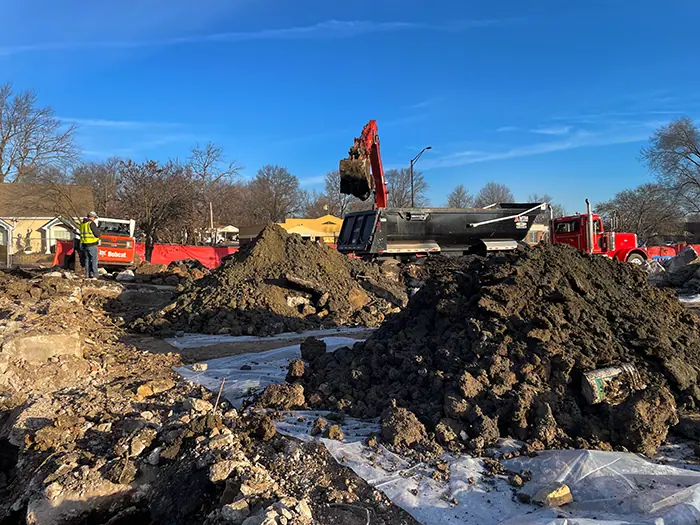
SCS’s Green Street Blog Series: Part II
In our Green Street blog series, we step you through a successful redevelopment project called Green Street in Lee’s Summit, Missouri. Throughout the blog series, we’ll point out how to identify and avoid potential environmental issues that can slow your redevelopment and remediation projects.
Initially, SCS Engineers completed due diligence to understand the potential environmental concerns about the unique properties acquired. We specifically looked at subsurface soil and groundwater to plan for and mitigate contamination before site excavation begins.

Proper soil management protects the environment and the health of the community. A Soil Management Plan outlines the steps to handle disturbed soil, including identifying regulated materials, overseeing construction activities, and managing potentially impacted soil.
As a full-service environmental firm, SCS professionals are onsite during earthwork activities, conducting soil testing and overseeing the proper disposal of materials to meet compliance and clean-up standards.
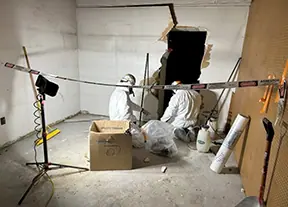
Upon project completion, SCS sends the city a comprehensive report detailing involvement in the abatement, demolition, and earthwork activities, along with analytical data and photographic documentation to show the site is pristine and ready for safe development.
Due diligence includes assessing the old buildings on site to identify and allow the safe removal of asbestos, lead-based paint, and hazardous materials before contractors proceed with building demolition.
Following due diligence and as part of a holistic plan, SCS environmental professionals collaborate with abatement and building demolition contractors. Communication and tight teamwork help comply with all federal, state, and local environmental regulations, keeping the project on track. By providing oversight throughout the process, including daily field monitoring and sampling, Lee’s Summit is confident work is done safely and to the highest standards.
We begin walking through tank removal and historical discoveries in Part III of the Green Street series on January 29.
Additional Resources:
 About the Author: Michael (Mike) Dustman is experienced in environmental project management, remedial design activities, building inspection, site assessments, and field training. He possesses an in-depth knowledge of relevant and applicable federal, state, and local environmental laws and protocols. Mike has served numerous local agencies and private clients, including the USEPA Region 4 Superfund Technical Assessment and Response Team. Mike is a certified asbestos project designer, management planner, and building inspector, a certified air sample professional, and a certified lead-based paint inspector and lead risk assessor.
Here at SCS, we work for developers, industry, and manufacturers to help them run cleaner, safer, and more efficiently. This PBS video provides insight into how SCS brings value to the waste industry, our clients, and, most importantly, our communities.
You may ask yourself, don’t pig farms create pollution? Yes, but even that waste is reusable!
Did you know the food you buy in the grocery is supported by our environmental experts? Learn more about SCS’s environmental engineers and consultants who bring contaminated properties back to life, lower and capture greenhouse gases for fuels and renewable energy, and make possible a brighter future.
If you are interested in becoming an SCS Engineers employee-owner, watch our comprehensive video to see the breadth of services our teams offer.
Corporate Headquarters